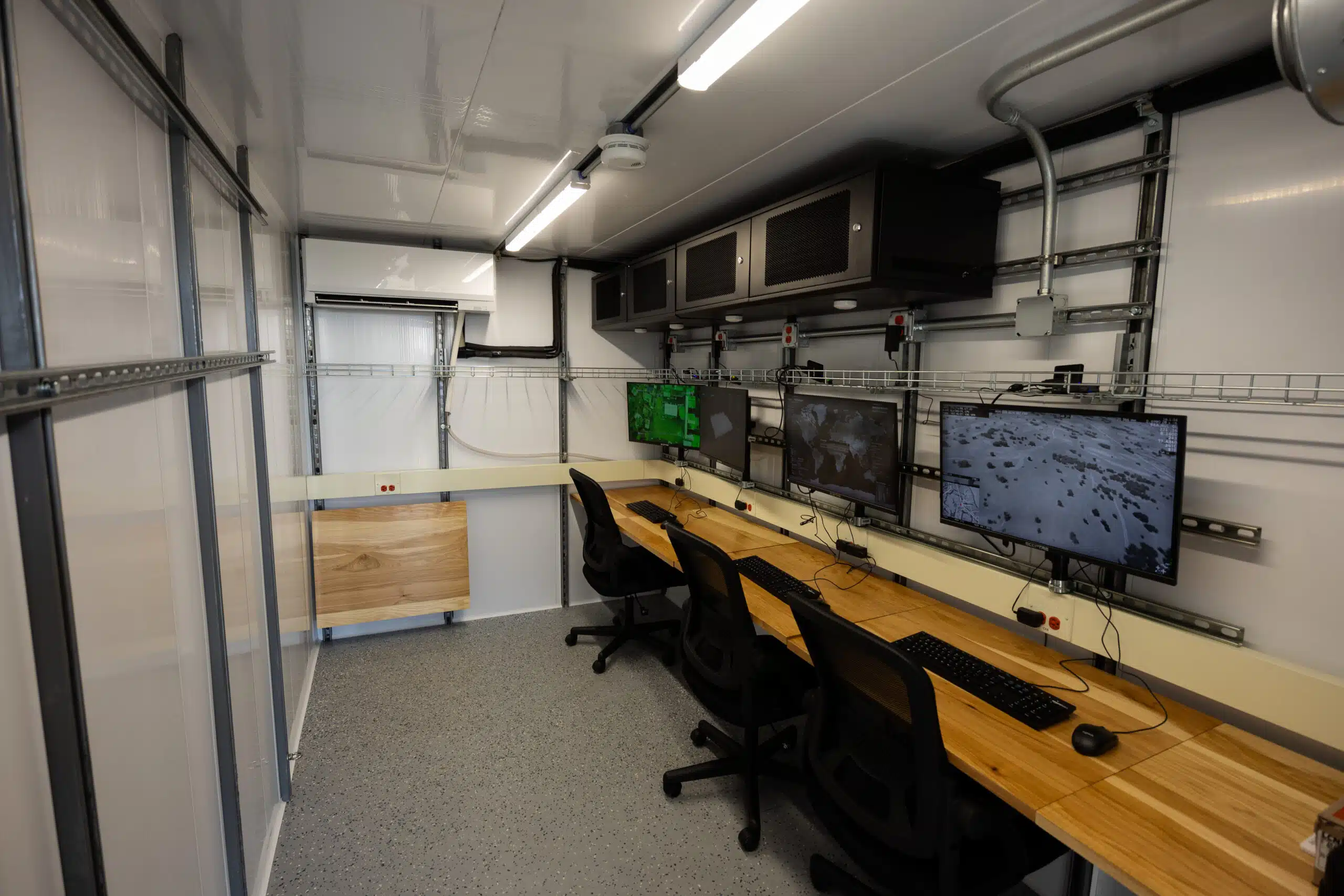
A SCIF room — Sensitive Compartmented Information Facility — is a government-accredited secure space designed to protect sensitive compartmented information, classified material, and other forms of sensitive information from physical, electronic, and acoustic compromise.
Meeting SCIF room requirements means thinking beyond the basic hardened conference room or secure space. When planning new SCIF facilities or expanding existing ones, understanding what accreditation actually demands can prevent costly redesigns, schedule delays, and denied approvals.
What Is a Sensitive Compartmented Information Facility?
A Sensitive Compartmented Information Facility is an accredited environment where sensitive compartmented information can be discussed, processed, or stored without risk of unauthorized disclosure.
Compared to something like a standard secure room, SCIFs are built and evaluated against strict technical specifications established under ICD 705 and related guidance.
These standards govern everything including wall construction, penetration sealing, access control systems and acoustic performance requirements.
These facilities support national security missions across intelligence agencies and defense organizations, hosting intelligence briefings, mission planning, and classified discussions. The accreditation process confirms that every construction and technical requirement has been met before any classified work can begin.
SCIF Room Requirements That Go Beyond the Basics
1. Physical Security Must Be Continuous
SCIF construction requires uninterrupted physical security across every surface: walls, floors, ceilings, doors, and all penetrations. This includes electrical conduit, HVAC pathways, and plumbing.
Gaps that would be acceptable in standard construction are not acceptable in SCIF construction. Penetrations that are not properly sealed, sleeved, and documented represent vulnerabilities.
In practice, inspectors review every detail, including:
- conduit entry points
- wall penetrations
- door frames and assemblies
Facilities that don’t create a secure perimeter that works together as a complete system often encounter punch-list issues that delay accreditation by weeks or months.
2. Acoustic Security Is an Accreditation Requirement
Acoustic security ensures that conversations inside a SCIF cannot be overheard, recorded, or captured outside the facility.
This affects multiple systems working together, including:
- wall assemblies
- door construction
- ceiling systems
- mechanical pathways such as HVAC
Fixed SCIFs inside larger buildings carry additional acoustic risk. In these buildings you need to evaluate adjacent spaces and common walls to ensure security.
When acoustic issues are discovered during testing, fixing it often requires reopening finished construction. Addressing these requirements early is significantly more efficient than correcting them later.
3. Electronic Security Must Be Designed In, Not Added After
Modern SCIF facilities must protect against electronic surveillance and unauthorized monitoring.
Depending on mission requirements, this can include:
- access control and monitoring systems
- intrusion detection systems
- RF shielding
These measures must be engineered into the facility from the start.
Retrofitting electronic security after construction often leads to:
- reopening walls
- modifying conduit pathways
- replacing installed components
These issues add cost, delays schedules, and can trigger additional inspections before accreditation can proceed.
4. SCIF Construction Is An Important Security Phase
SCIF construction introduces risks that don’t exist in standard building projects.
During construction, attention must be given to:
- who has access to the site
- how materials enter the facility
- how work is documented and inspected
Uncontrolled access or undocumented changes can compromise the integrity of the facility before it is even operational.
Inspectors require documentation that proves the facility was built as designed. Missing records and undocumented field modifications are among the most common causes of delays.
5. Accreditation Is the Final Authority
A SCIF is not considered operational until it is formally accredited by the cognizant security authority.
Accreditation is an independent verification process that confirms:
- construction meets ICD 705 requirements
- security systems are properly integrated
- documentation supports the build
Facilities designed without consistent awareness of accreditation standards often require redesigns or re-inspections causing schedule extensions.
Where SCIF Projects Commonly Go Off Track
Organizations new to SCIF construction often underestimate the complexity of how these requirements intersect.
Common issues include:
- incomplete construction documentation
- untracked field modifications
- acoustic failures discovered during testing
- electronic systems added too late
These problems rarely happen in isolation. More often, they build on each other and create delays that affect both budget and schedule.
Fixed, Modular, Mobile, and Temporary SCIFs
Not all SCIF rooms are permanent structures. Depending on mission requirements and timelines, organizations may consider:
Each option introduces different planning and coordination challenges.
What does not change is the requirement to meet ICD 705 standards. Only the approach to achieving and documenting those standards differs.
Long Term Consequences of SCIF Planning Decisions
SCIF facilities protect intelligence sources, classified material, and sensitive information critical to national security.
Decisions made early in the planning process such as site selection, construction method, acoustic design, and security integration are difficult and costly to reverse later.
When SCIF rooms are designed with accreditation requirements built in from the start, they support mission readiness without delays.
When they are not, they introduce risks that cannot be corrected without time, cost, and disruption.
Why CenCore is the Right SCIF Partner
SCIF facilities are complex because construction, security, acoustics, and accreditation must align from the beginning.
CenCore supports secure SCIF programs by bringing those elements together early in the process.
That support includes:
- integrating ICD 705 requirements during planning
- maintaining construction security and oversight
- ensuring documentation supports accreditation
- aligning physical, electronic, and acoustic systems
The result is a more predictable path to accreditation, with fewer surprises, less rework, and reduced schedule risk.
Learn more about CenCore’s SCIF capabilitieshere and explore how the right approach to SCIF construction and accreditation supports your mission from day one.
FAQs: SCIF Rooms and Secure Facilities
How is a SCIF different from a secure room? A secure room may provide basic physical access control, but a secure compartmented information facility must satisfy a comprehensive set of physical security, acoustic security, and electronic security requirements established under ICD 705 — and must be formally accredited by the cognizant security authority before use.
What is a SCIF room used for? A SCIF room is used to discuss, process, or store sensitive compartmented information and classified material in an accredited secure environment. Access is limited to cleared personnel, and the facility must meet physical, acoustic, and electronic security requirements before any classified activity can occur.
Can existing facilities be converted into SCIF rooms? Yes, many existing facilities can be retrofitted to meet SCIF room requirements. However, SCIF construction within existing buildings introduces additional complexity, including acoustic isolation from adjacent spaces, penetration remediation, and host facility coordination. All retrofitted spaces must still satisfy full ICD 705 accreditation standards.
How long does SCIF accreditation take? Accreditation timelines vary depending on facility complexity, the cognizant security authority, and how completely the facility was designed and built to ICD 705 standards. Facilities that engage security professionals early and maintain thorough construction documentation typically move through the accreditation process faster than those that address compliance issues after construction is complete.
What are the most common causes of SCIF accreditation delays? The most common causes include incomplete construction documentation, undocumented field modifications, penetrations that do not meet ICD 705 requirements, acoustic failures identified during inspection, and electronic security systems that were not integrated into the original design. Early coordination between construction teams and security professionals significantly reduces the risk of these issues.