With the changing landscape of warfare, modern command and control depends on the ability to effectively communicate at the edge through networks and communication equipment. Defense teams operating in distributed environments also need protected places where authorized personnel can access classified information and coordinate decisions securely.
That requirement becomes harder to meet at the tactical edge. Permanent command centers and fixed facilities may be too distant, unavailable, or poorly suited to changing operational needs. Even when connectivity is available, personnel still need a secure environment for classified planning, computing, analysis, and collaboration.
A mobile SCIF helps close that infrastructure gap. By bringing an accredited secure space closer to the point of operation, mobile and modular SCIFs can support command and control without requiring every classified activity to occur inside a permanent installation.
Why Command and Control Is Moving Closer to the Edge
Command and control connects personnel, information, communications, computing, and decision-making. Its effectiveness depends on how quickly authorized users can receive information, understand changing conditions, and coordinate an appropriate response.
At the tactical edge, those activities may occur in a forward operating location, temporary command center, test site, emergency response area, or other location beyond established infrastructure.
Teams in these environments may need to:
- Review classified intelligence
- Coordinate with distributed personnel
- Operate approved mission applications
- Process information near its source
- Conduct secure voice, video, or data communication
- Maintain access to command and control systems
- Adapt equipment and workspace configurations as requirements change
Relying entirely on a distant facility can introduce operational dependencies. Personnel may have to travel to access an accredited workspace, while data may have to move across constrained networks before it can be processed or reviewed.
Placing effective communications and computing closer to the operation can reduce that dependence. However, moving technology to the edge is only part of the answer. Defense organizations must also protect the people, information, and systems using that technology.
Secure Communication Requires a Secure Environment
Cybersecurity protects systems and data, but secure communication also depends on physical security. A protected network does not eliminate the risks created by an unsuitable workspace.
Personnel may need to discuss sensitive information, display classified material, operate specialized equipment, or connect to protected networks. A temporary office, commercial conference room, or general-purpose shelter does not automatically provide the security measures required for those activities.
A Sensitive Compartmented Information Facility, or SCIF, is an accredited space in which Sensitive Compartmented Information may be processed, stored, used, or discussed. ICD 705 requires SCIFs to follow uniform physical and technical security requirements and to receive accreditation before SCI activities begin.
A SCIF room provides protection through:
- Controlled access for authorized personnel
- Acoustic protection for classified discussions
- RF shielding when required
- Procedures for handling and protecting information
What Mobile SCIFs Add to Command and Control
A mobile SCIF provides a protected environment where capabilities like secure communication can be used.
The SCIF’s value comes from bringing personnel, communications, computing, security, power, and workspace together in a configuration designed around an operational requirement.
Classified Collaboration Near the Operation
Distributed teams may need to combine information from different sources, brief decision-makers, update plans, or coordinate with other organizations. If the nearest accredited facility is far from the operating location, classified collaboration can become separated from the activity it supports.
A portable SCIF can bring that collaboration space closer to authorized users. Depending on its configuration, the facility may support intelligence analysis, operational planning, secure briefings, or other command and control functions.
This proximity can help personnel maintain a more direct connection between incoming information, analysis, and coordinated action.
Secure Computing at the Tactical Edge
Modern command and control increasingly relies on computing resources that organize data and support mission applications.
Edge computing places suitable processing capability closer to where data is needed. In a classified environment, that computing still requires protection. The supporting facility must account for more than servers. It may also need networking equipment, workstations, power distribution, environmental controls, cable management, and physical separation between systems.
Mobile, Modular, and Containerized SCIF Options
Deployable secure facilities are available in several forms including containerized and modular SCIFs.
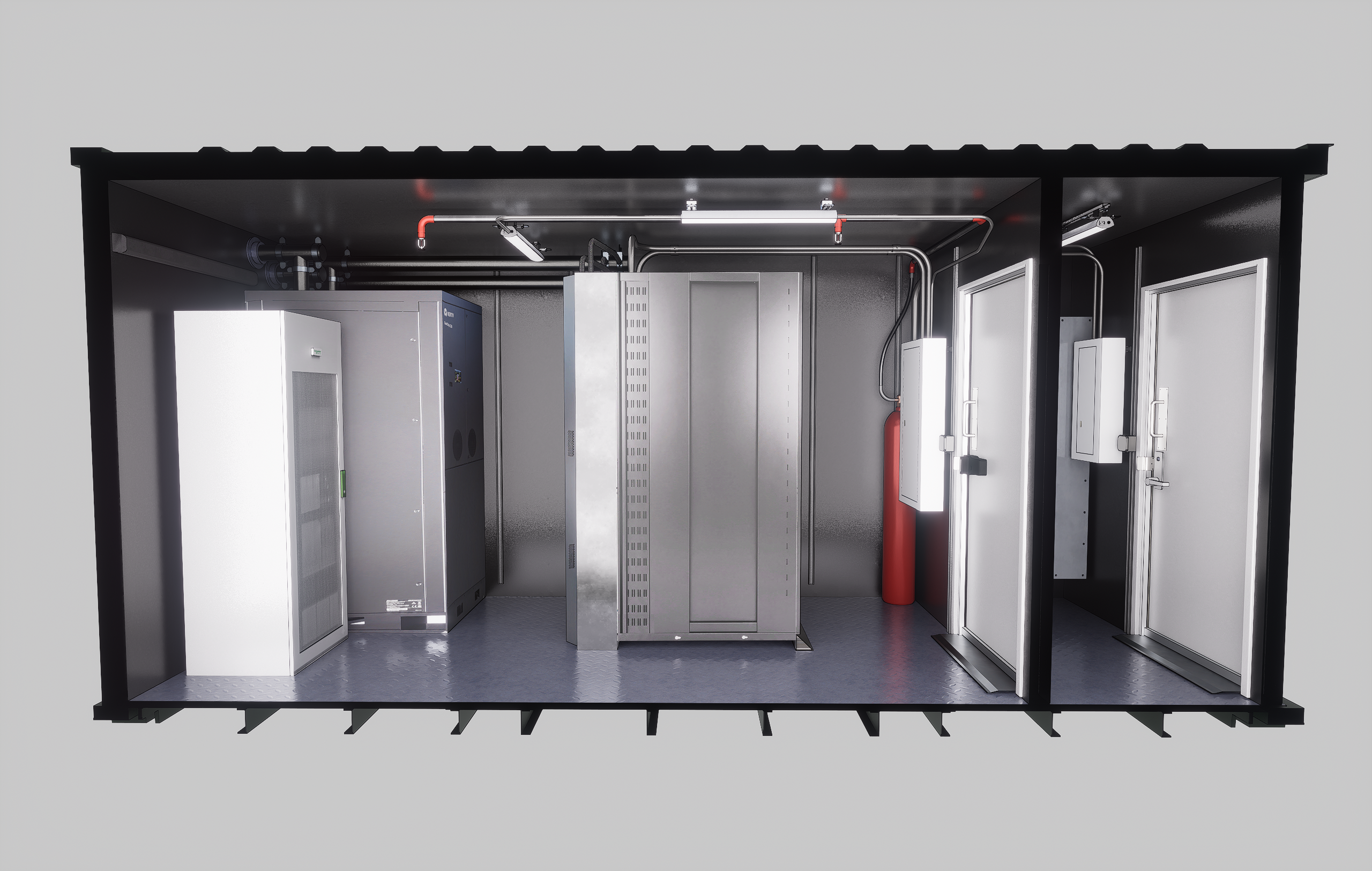
A containerized SCIF uses a transportable container-based structure allowing for rapid deployment and relocation. This approach can provide a self-contained footprint for command and control, communications, computing, or classified workspace.
A modular SCIF may use one or more manufactured sections to create a larger secure environment. Modular SCIFs can support expanded work areas, additional equipment, or more persistent operations while retaining the advantages of repeatable off-site fabrication.
Building Resilient Command and Control at the Edge
Defense command and control is becoming more distributed, but the need to protect classified information remains constant.
As personnel, networks, and computing resources move closer to the point of operation, secure infrastructure must support them. Without a protected environment, advanced technology may remain disconnected from the personnel and decisions it is intended to enable.
Mobile SCIFs help address this challenge by providing a configurable secure facility for classified operations at the tactical edge. They can support protected collaboration, secure communication, edge computing, and command center functions in locations where fixed infrastructure is unavailable or impractical.
The strongest result does not come from mobility alone. It comes from integrating personnel, security, communications, computing, utilities, and accreditation around a clearly defined command and control requirement.
Explore CenCore’s Secure Platforms
CenCore develops modular and containerized secure platforms designed to support classified operations, protected communications, secure computing, and command and control at the tactical edge.
Explore CenCore’s Secure Platforms to evaluate a mobile SCIF solution around your mission, systems, site, security requirements, and deployment conditions.
Frequently Asked Questions (FAQ)