What to evaluate before investing in a deployable command capability.
When missions rely on secure communication, rapid deployment, and real-time coordination, a military mobile command center becomes essential infrastructure. These modern mobile command centers give defense, homeland, and emergency teams the operational capability they need to operate anywhere — with the communication systems, security, and mobility already built in.
If you’re evaluating whether a mobile command center or mobile command vehicle is right for your mission, here are five key factors to consider.
1. Mission Requirements & Operational Needs
Before selecting any command center, clarify what problem you’re solving and what your specific needs are. Mission requirements drive everything — layout, power, communications, and security.
Ask questions like:
- What level of classification is required for secure communication?
- Are you coordinating ISR feeds, drones, or tactical communications?
- Will personnel, officers, or incident commanders be operating inside for extended periods?
- Do you need a unit capable of acting as a command post, security command center solution, or even a portable SCIF?
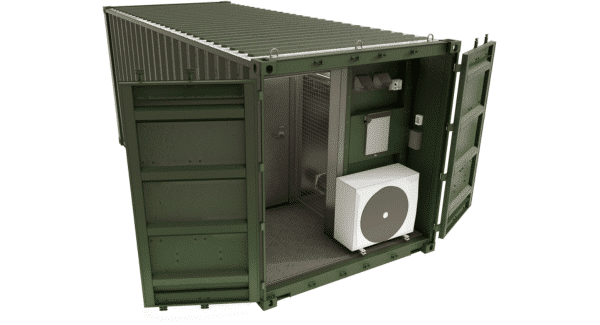
For organizations needing a secure, ready-made mobile command unit, CenCore’s platform is built for rapid deployment and multi-domain environments:
Cencore’s Mobile Command Unit
2. Deployment Speed, Mobility & Field Operations
In both defense and emergency management, minutes matter. A high-quality mobile command center should offer:
- Rapid deployment
- Roll-on/roll-off transport
- Forkliftable, stackable container format
- Compatibility with air, road, or rail transport
- Minimal site prep
Mobility is what transforms a command center from a static asset into a mission capability.
This also makes them ideal for field operations such as crisis management, or emergency communications.
Mobile Command Units, like CenCore’s, deploy in under an hour — offering true mobility when the mission moves fast.
3. Security, Communication & Protection Level
A mobile command center must secure both people and data. Depending on your mission, look for:
- Physical protection and intrusion resistance
- Controlled access
- Secure communication infrastructure
- SCIF or T-SCIF configurations
- EMI / HEMP shielding
- Resilient satellite communication or mobile satellite service options
Whether used for homeland security, critical infrastructure protection, or forward military operations, the right communication systems enable operational efficiency and informed decision-making.
4. Power, Cooling & Redundancy for Operational Efficiency
A command center is only as strong as its uptime. Whether used as a command vehicle or portable command center, look for:
- Redundant HVAC systems
- Generator, solar, and battery integration
- Rack-ready electrical designs
- Environmental controls for mission-essential electronic equipment
- Power redundancy to support data servers, tactical radios, and secure networks
This ensures continuous operation during crisis management scenarios or complex field missions.
5. Customization, Scalability & Multi-Mission Capability
No two missions are identical — your mobile unit must adapt. Look for modular options that support:
- Workstations and mission-planning areas
- Communications racks
- Tactical video walls
- Sensor integration
- Secure storage
- Edge computing nodes
- Expansion attachments for larger command post operations
- Configurations suited for officers, analysts, medical teams, or incident commanders
Flexible design allows the unit to evolve with your operational needs instead of locking you into a rigid structure.
To explore a scalable option built for multi-domain missions:
Why CenCore Stands Out in Mobile Command Solutions
CenCore builds mobile command units designed for fast, secure operations in demanding environments. Their containerized systems integrate power, HVAC, workstations, and secure communications into a single rugged solution, allowing teams to establish a fully functional command center almost anywhere with minimal setup.
What sets CenCore apart is our ability to support classified missions from day one. Our platforms meet SCIF and SAPF standards, enabling secure processing of sensitive information without the delays of traditional construction. Combined with a flexible, tech-agnostic design and rapid global deployment capability, these systems adapt easily to ISR operations, joint command environments, and emergency response scenarios.
Backed by real-world use in Department of Defense programs, CenCore delivers a proven combination of speed, security, and scalability making it a strong choice for organizations that need reliable mobile command capability in critical situations.
Final Thoughts
A military mobile command center is more than a deployable building — it’s a mobile backbone for communication, coordination, and mission execution. It’s the backbone of the battlefield. The right configuration can revolutionize safety, streamline response timelines, and elevate operational efficiency across defense, homeland security, and emergency management missions.
Whether you need a portable command center, a specialized mobile command vehicle, or a full-scale command post, understanding your mission requirements helps you select a solution that fully supports decision-makers and field teams.
To see an example of a purpose-built system engineered for today’s complex operational environments click here.