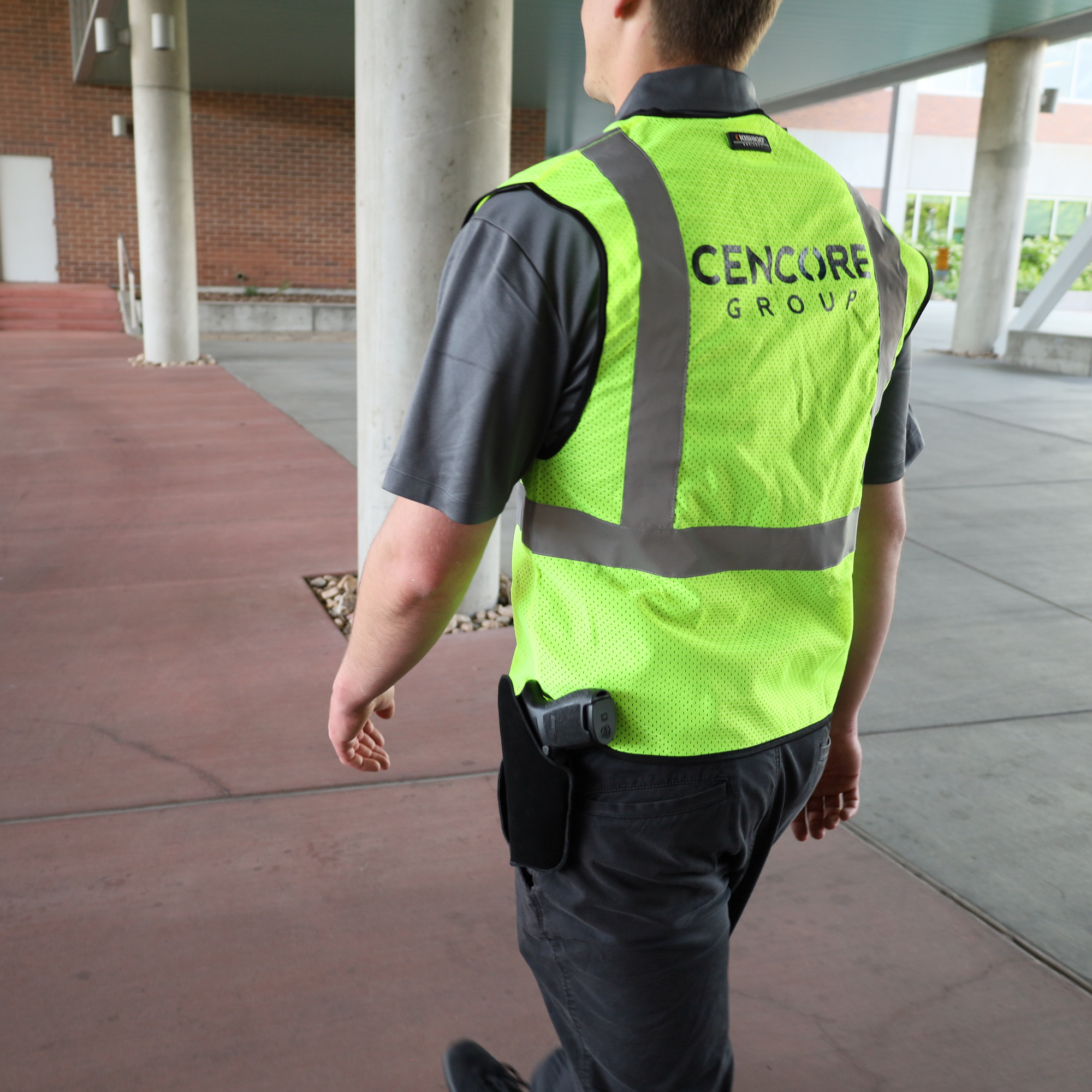
Security in controlled environments is all about being able to manage in real time. A security escort plays a critical role in that process, ensuring that visitors, contractors, and other non-cleared individuals can do their work without exposing sensitive areas or information.
Security escort teams provide FSOs and program security teams a reliable way to prevent unauthorized access while keeping operations moving.
What Is a Security Escort?
A security escort is a trained security officer or security guard responsible for accompanying individuals who don’t have the required clearance or authorization to move freely within a facility.
Unlike general patrol services, a security escort operates with direct accountability. Their responsibility is to provide continuous supervision, access control enforcement, and immediate response to potential threats.
This role exists across multiple environments, including data centers, SCIFs, construction sites, and event security contexts, where controlling movement is essential to maintaining safety and compliance. Escorts ensure visitors don’t access restricted areas or unintentionally expose sensitive systems or personal information.
When Is a Security Escort Required?
Security escorts are typically required whenever someone cannot independently meet access requirements. That includes both high-security government environments and commercial facilities handling sensitive assets.
In many federal and regulated settings, escorts are mandatory. For example, guidance for secure facilities needs visitors to be escorted for the duration of their visit to maintain control and accountability.
You’ll most often see security escort services used in situations like:
- Uncleared contractors working in restricted areas
- Construction or maintenance inside controlled spaces
- Visitors entering facilities with classified or sensitive systems
- High-risk environments with elevated threats or compliance requirements
Even outside of classified settings, many organizations require escorts as part of their broader security guard service needs and access control policies, especially when managing vendors, short-term workers, or external clients.
Why Security Escorts Are Critical for Access Control
At its core, a security escort is an extension of access control. While systems and badges help regulate entry, escorts ensure those controls are enforced continuously after entry.
Without escorts, organizations rely heavily on trust and static controls which leaves gaps. Visitors may wander, misunderstand boundaries, or unintentionally access restricted areas. In more serious cases, individuals may attempt to bypass controls altogether.
Security guards and escorts help prevent that by:
- Verifying credentials and monitoring access points
- Supervising movement inside restricted areas
- Acting as a deterrent to potential threats
Organizations that enforce escort policies reduce the risk of theft, data exposure, and compliance violations. Unauthorized access is one of the most common causes of physical security incidents, and escorting visitors is a direct way to address that risk.
How Security Escort Programs Are Managed
Strong escort programs need to be structured. While every facility has its own requirements, the most effective programs follow a consistent framework.
It starts before the visitor even arrives. Facilities establish a visitor policy that defines who must be escorted, where they can go, and how their movement will be tracked. These policies are a essential part of physical security and visitor management systems.
Once on-site, security personnel take over the process. A security officer or security professional verifies identity, issues credentials, and begins the escort.
From there, the focus shifts to control and visibility. Escorts maintain constant supervision, limit access to approved areas, and ensure that no sensitive information or equipment is exposed. In high-security environments, this often includes maintaining line-of-sight monitoring at all times and preventing access to prohibited items.
Documentation is just as important as physical presence. Every visit should be logged creating an audit trail that supports investigations, compliance requirements, and internal reviews.
Where Many Escort Programs Break Down
Even organizations with strong policies can run into issues if execution is inconsistent.
Common issues include understaffing, lack of training, or relying on general employees instead of trained security personnel. In these cases, escorts may lose visibility, fail to enforce rules, or miss early signs of potential threats.
Visitor management is one of the most complex areas of access control because every visitor has a different purpose and level of access. Without clear processes and dedicated personnel, it quickly becomes difficult to maintain consistency.
How CenCore Delivers Security Escort Solutions
CenCore approaches security escort services differently. Instead of treating escorting as a basic support task, it delivers cleared, mission-ready security professionals trained specifically for high-security environments.
These teams operate across:
- SCIF construction and renovation projects
- Secure government and commercial facilities
CenCore security guards integrate directly into site operations, providing continuous monitoring while supporting productivity. Their experience in access control, construction security, and classified environments allows them to manage escorts without disrupting timelines or workflows.
In SCIF construction and similar environments, escorts play a key role in preventing unauthorized access to sensitive systems and stopping the introduction of prohibited devices or surveillance tools.
What sets this approach apart is scalability. Whether a site needs short-term coverage or long-term staffing, CenCore can deploy security personnel quickly to maintain consistent protection and compliance.
Secure Your Facility with the Right Escort Strategy
Security escorts are essential for any organization that needs to protect assets, control access, and maintain compliance in high-risk environments.
CenCore provides the cleared personnel, structure, and experience needed to deliver reliable security escort services so your team can focus on the mission while your site stays protected.
Secure your secure facilities with our security escorts here.
FAQs
What does a security escort do? A security escort is responsible for accompanying visitors or contractors within a controlled area, ensuring they follow security protocols and do not access restricted systems or information. Their role includes monitoring movement, enforcing access control, and maintaining safety throughout the visit.
When are security escorts required? Security escorts are required whenever individuals do not have the proper clearance or authorization for unescorted access. This is common in SCIFs, construction sites, data centers, and other secure facilities where protecting sensitive information is critical.
How do security escorts prevent unauthorized access? Security escorts prevent unauthorized access by maintaining continuous supervision, verifying credentials, limiting movement to approved areas, and responding to suspicious behavior in real time. Their physical presence also acts as a deterrent.
What makes a strong security escort program? A strong program includes clear policies, trained security personnel, proper documentation, and consistent oversight. Organizations that combine these elements are better equipped to reduce risk and maintain compliance.