When Defense Secretary Pete Hegseth addressed military leaders at the National War College on Fort McNair, he didn’t deliver another policy update. He issued a challenge to the Defense Department itself — to move from bureaucracy to battle readiness and rebuild the arsenal of freedom that once defined American power.
Speaking just miles from the White House, Hegseth warned that the United States faces an adversary within: the slow, risk-averse culture of the Pentagon. “Not the people, but the process,” he said, quoting former Defense Secretary Donald Rumsfeld. More than twenty years after the Cold War, the same inertia still limits innovation and speed.
Transformation, Not Reform
Hegseth drew a clear line between reform and transformation. “I’m not here to reform. I’m here to transform,” he said, describing plans to put the entire War Department on a wartime footing.
The goal is to align the defense acquisition system with the nation’s National Defense Strategy — replacing years of paperwork with weeks of progress. The Secretary compared his effort to the rapid mobilization that fueled World War II, when the American people turned factories into armories overnight.
“An 85 percent solution today,” he said, “is better than a 100 percent solution five years from now.”
Realigning the Defense Industrial Base
At the center of his speech was the need to modernize the defense industrial base — the network of manufacturers, engineers, and innovators that produce America’s strength. Hegseth called for defense contractors, from Lockheed Martin to small suppliers, to invest their own capital, expand capacity, and prioritize speed over process.
He praised Republican Sen. Roger Wicker and the Senate Armed Services Committee for using the National Defense Authorization Act to support long-term contracts and stronger supply-chain signals. The message was clear: capitalism itself must become a weapon of deterrence.
To reinforce that, he announced the end of JCIDS — a 400-page rulebook that slowed capability development — and replaced it with faster review boards and direct funding mechanisms tied to warfighter needs. The FY 2025 defense budget, he said, will begin reflecting these priorities immediately.
Speed, Scale, and Accountability
Hegseth also unveiled the Warfighting Acquisition System, replacing the old model with empowered Portfolio Acquisition Executives who can make real-time trade-offs in cost, schedule, and performance. This shift, combined with the Modular Open Systems Approach, will allow software and hardware upgrades at commercial speed — keeping the defense industry agile against evolving threats.
He urged cultural change as well, renaming the Defense Acquisition University to the Warfighting Acquisition University to emphasize merit, accountability, and a renewed warrior ethos.
“Our military and taxpayers need a defense industrial base that can scale with urgency in a crisis — not one that waits for money before taking action.”
Connecting Vision to Action
As the Defense Department reorients toward speed, scalability, and secure infrastructure, private-sector innovation becomes mission-critical.
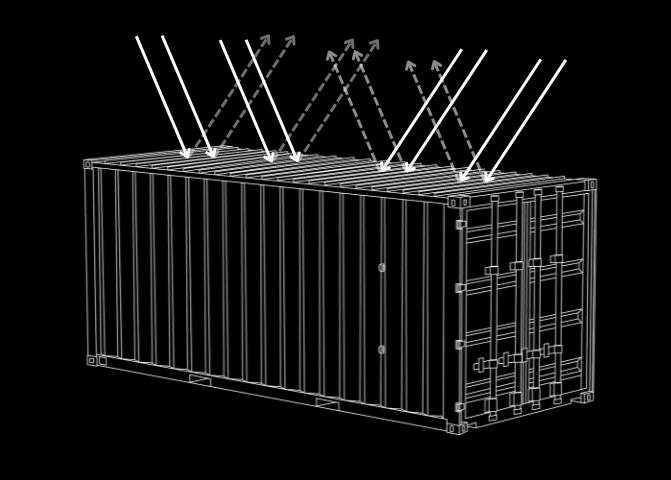
At CenCore, that transformation is already underway. Our Containerized Secure Units (CSUs) and modular data centers provide the deployable, secure backbone needed for this new era of industrial realignment. Built for rapid integration and field-ready deployment, these systems deliver the agility and resilience that define modern deterrence — exactly the kind of capability Secretary Hegseth urged industry to deliver.
A New Era of the Arsenal of Freedom
Hegseth’s speech signaled a shift from incremental acquisition reform to full industrial mobilization. His vision — shared by the Trump administration and echoed across the Defense Security Cooperation Agency and other programs — is to rebuild an ecosystem where government and industry move with a shared sense of urgency.
If realized, this alignment of the industrial base, Congress, and the private sector could restore the production power that once defined America’s national security.
The United States did it before — and as Secretary Hegseth reminded his audience — it can do it again. The arsenal of freedom will rise once more.
About CenCore
CenCore is a leading provider of cleared staffing solutions, advanced technology modular platforms and proximity-based services to the defense, enterprise business and intelligence communities. With deep expertise in supporting critical national security missions, CenCore connects top-tier cleared professionals with organizations driving innovation in defense technology, cybersecurity, and intelligence operations. Our commitment to excellence ensures that America’s most vital programs have access to the skilled workforce, and secure platforms in time and on-site to maintain technological superiority and operational readiness for the warfighter.